Move YOUR way to good health

Upcoming health topics:
2nd Quarter Focus: All Things FITNESS
May – Mental Health Month
June – Dental Health & Men’s Health
… do you not know your body is a temple of the Holy Spirit within you, whom you have from God? ... So glorify God in your body. – 1 Corinthians 6:19-20
Fitness is an important piece of the overall “Health and Wellness Puzzle.” Although mental, emotional and physical health can be directly affected by one’s fitness level; on its own, it does not equate to HEALTH. According to the World Health Organization, it’s “A state of complete physical, mental and social well-being, and not merely the absence of disease or infirmity.” (Source: https://opt.net.au/optimum-life/difference-fitness-and-health/)
Components of being physically fit:
- Cardiorespiratory fitness. Helps reduce the risk of heart disease, type 2 diabetes, stroke.
- Muscular strength. Supports bone structure and density, as well as allows muscles to work in unison, thereby more efficiently.
- Muscular endurance. The ability of a muscle to continue exerting force without tiring.
- Body composition. The relative amounts of muscle, bone, water and fat an individual has. A person can potentially maintain the same weight but radically change the ratio of each of the components. THE SCALE ONLY TELLS PART OF THE STORY!!!
- Flexibility. Important because it improves the ability to link movements together smoothly and can help prevent injuries.
Benefits of physical activity
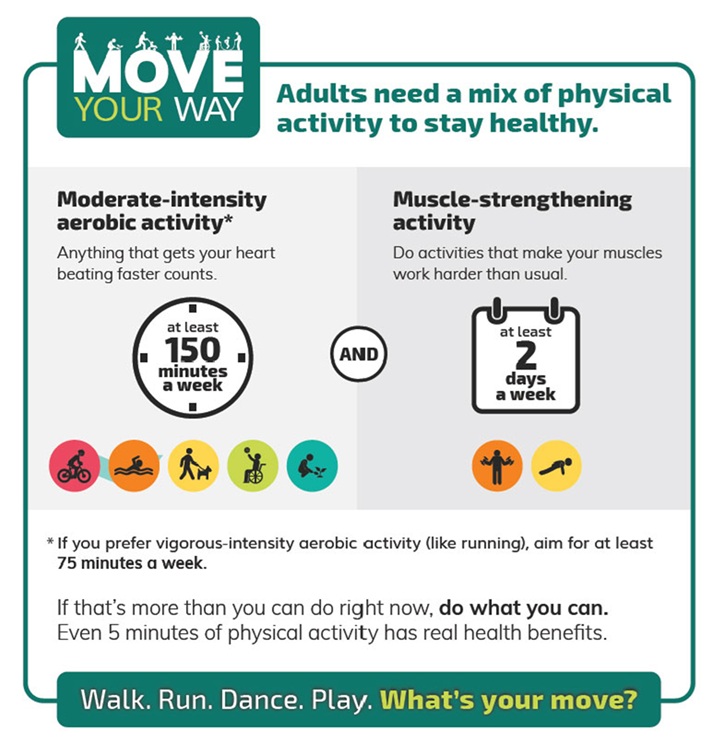
According to the Centers for Disease Control, regular physical activity is one of the most important things you can do for your health. Being physically active can improve your brain health, help manage weight, reduce the risk of disease, strengthen bones and muscles and improve your ability to do everyday activities.
Adults who sit less and do any amount of moderate-to-vigorous physical activity gain some health benefits, such as: reduced health risk, stronger bones and muscles, improved ability to do daily activities and PREVENT FALLS, and manage chronic health conditions and disabilities. Check out the benefits associated with being active.
Physical activity vs. Exercise
As a health coach, I always heard, “I’m active.” And I’d always ask for more details, “How are you active? Are you busy with various daily activities, or do you plan regularly, structured movement?” There’s a difference. And, while they’re both important for overall health, it’s also important to understand the goal of exercise vs. physical activity.
Not all physical activity is considered exercise. Exercise is a subcategory of physical activity and is considered planned, structured and purposeful physical activity. The goal is to increase physical fitness. General physical activity aims to reduce the time being sedentary, complete tasks and so on.
(Source: https://research.med.psu.edu/oncology-nutrition-exercise/patient-guides/exercise-vs-activity/)
EXAMPLES:
Aerobic exercise – walking, jogging, cycling, swimming
Resistance training – exercises with dumbbells, weight machines, kettlebells and resistance bands
One of your exceptional wellness solutions – Wondr Health – offers some profound insight on including more movement into your day – your “MOVE Framework” – as a guide to building an enjoyable, doable activity plan that works for YOU!
M – Minutes per week
O – Over 3-5 days
V – Vary duration
E – ENJOY!
Check out the full resource HERE.
Ready to give Wondr a try for more tools to improve your overall wellness, while also losing weight? Start Wondr.