The value of supersizing meals is not worth the health risks
Upcoming health topics:
1st Quarter Focus: Prevention, Prevention, Prevention!
2nd Quarter Focus: All Things Fitness
April - Physical Activity and Wellness
May - Mental Health Month
June - Dental Health & Men's Health
So, whether you eat or drink, or whatever you do, do all to the glory of God. – 1 Corinthians 10:31
“An ounce of prevention is worth a pound of cure” – Benjamin Franklin
To a certain extent, we can (and maybe should) take this famous saying literally. For example, eating past fullness can cause us to consume more energy — which is measured by calories — and nutrients than our body needs. Over time, this habit can cause unwanted weight gain, contributing to obesity and increase your risk of developing certain chronic illnesses, like diabetes and heart disease.
Portion vs. Serving Size
It’s important to distinguish between the terms, “portion” and “serving size.” While a portion is the amount you decide to eat at a given meal or snack, a serving is measured (e.g., one slice of bread or 8 ounces/236 ml of milk). Therefore, one portion of a food or drink can contain multiple servings, or conversely, less than a standard serving.
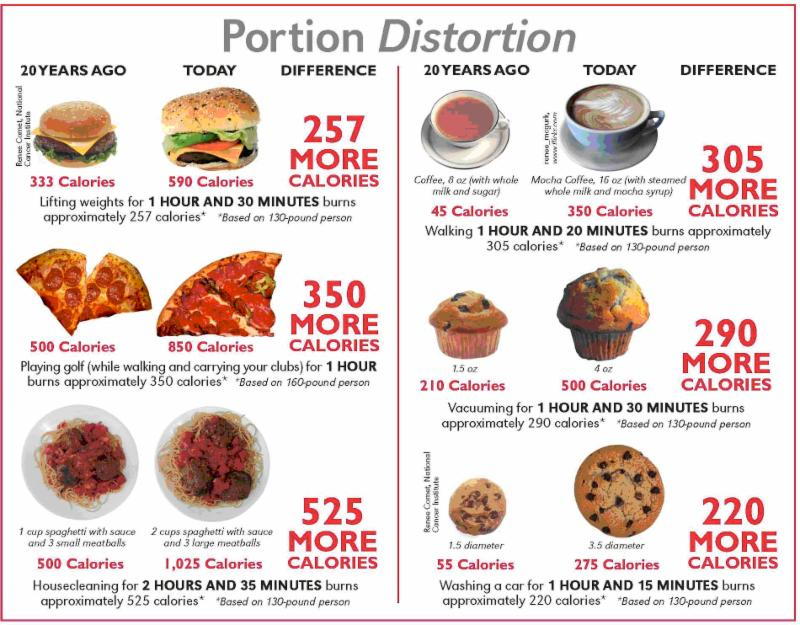
A recent study found that fast-food restaurants’ portion sizes increased dramatically from 1986-2016. Portion size growth coincided with worldwide rising rates of obesity, which the World Health Organization declared a global pandemic in 2000. With the current U.S. obesity rate at 40.3%, unfortunately, we have not seen any of these statistics improve. Supersized portions continue to appeal to the consumerist idea of a better “value” — getting more food for less money. The potential problem here is that people tend to eat more when given larger portions. Thus, “portion distortion,” or the “portion-size effect,” refers to this normalizing of exaggerated portion sizes.
While we all occasionally overindulge, doing so becomes a problem when we habitually override our internal fullness cues by eating more than we need to sustain our body. Portion distortion reinforces external food cues to dictate when you eat or stop eating. That means we become more reactive to eating food we see and less reactive to signals from our body indicating that we are hungry or full. Depending on our level of sleep, activity level and age, our needs may change from day to day, which is why it’s important to listen to our body’s fullness and hunger cues. We can practice this by allowing ourselves the time to eat more mindfully and tune in to our body’s messaging.
Here are some tips for keeping portions realistic as you home in on your fullness and hunger cues:
- Check the nutrition label for the serving size. But keep in mind that serving sizes are based on a 2,000-calorie diet, which doesn’t reflect everyone’s unique needs. Your nutritional needs and appetite may vary slightly from day to day.
- Eat foods that promote greater satiety, such as vegetables, fruits and proteins. These may help you more easily discern that you’re full because they deliver fiber and protein.
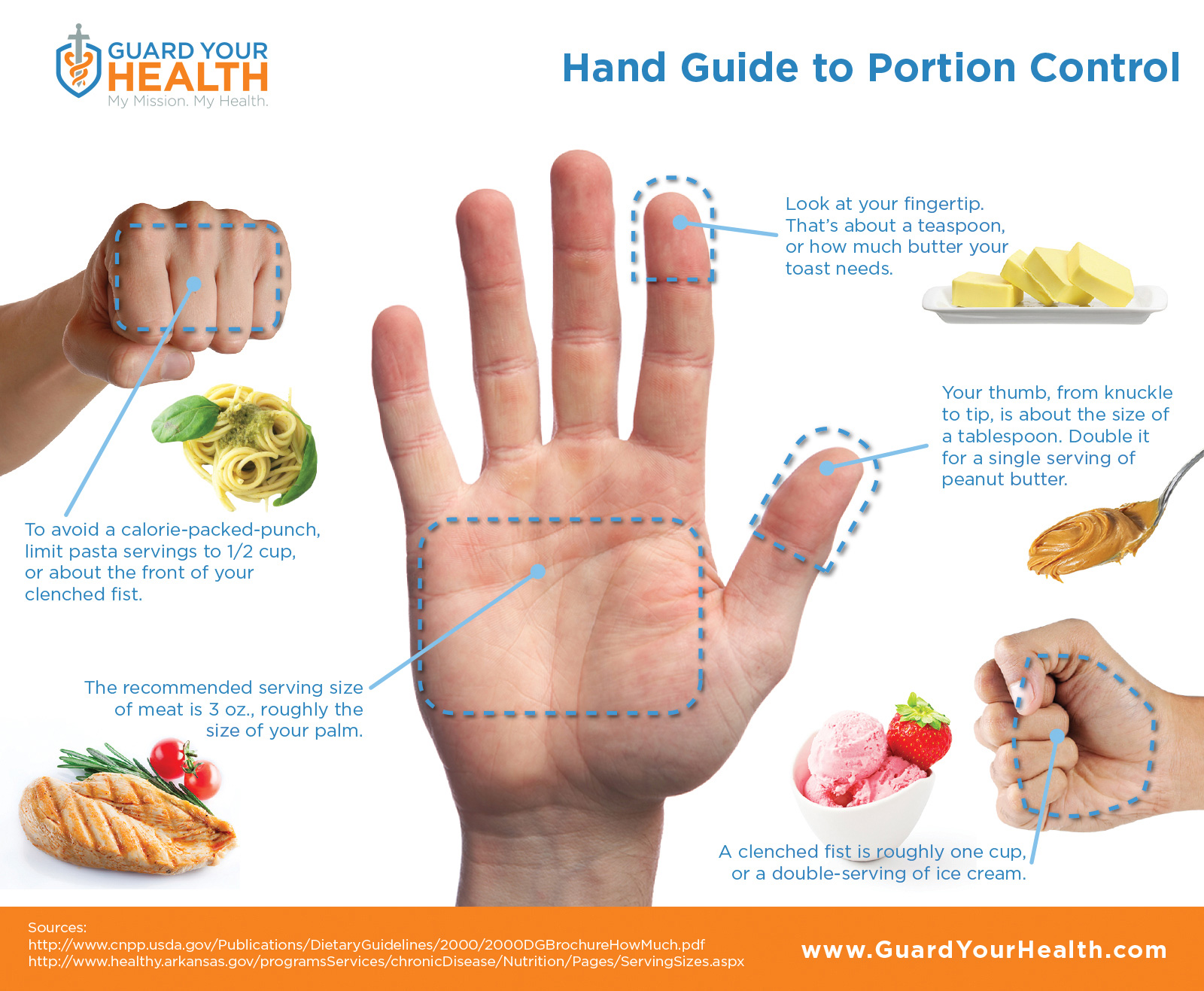
- Use visual aids, such as the one below, as you begin to discern what a good portion is for you.
- Assess what you’re eating while you’re eating it and how you feel while doing so. At the end of the meal, take inventory of how your body and mind feel. Try to avoid eating in a rush. To focus on food’s flavor, avoid distractions like screens or books while eating.
- Skip the supersize. Upgrading can be a tempting deal, but if you can, skip it. You can also set aside part of what you’re served for later and put it away before you dig in.
- At restaurants, ask for half portions or smaller portions. Don’t force yourself to skip dessert if you have a sweet tooth, but consider sharing your sweet treat with your tablemates.
- At home you may consider using smaller plates if you’re accustomed to using large ones.
- At the grocery store, buy snack foods in individually packed servings — at least as you get better acquainted with your body’s signals.
Source: Healthline
God created us with built-in portion guides!